Skip to content

Life-Centered Design: Responsibility Beyond Users

Good UX/UI design is centered on the needs of users. What would change if we also considered the environment, resources, and future generations as stakeholders? Life-Centered Design broadens our perspective to include the long-term consequences of digital products.

A graphic illustration of many colorful stripes that run straight through the image, forming a pattern.

Consider the effects within the system

Life-Centered Design evaluates not only whether an interface works, but also what environmental and social impacts it has. In this way, digital products can support more sustainable decisions for example, through consolidated delivery windows, lower-emission options or prioritizing repairs and reuse.
Bringing new perspectives into practice

Methods such as systems mapping and non-human personas make connections and non-human perspectives visible in the design process. They help companies embed responsibility early in the product decision-making process and identify design possibilities that go beyond the immediate use of the product.

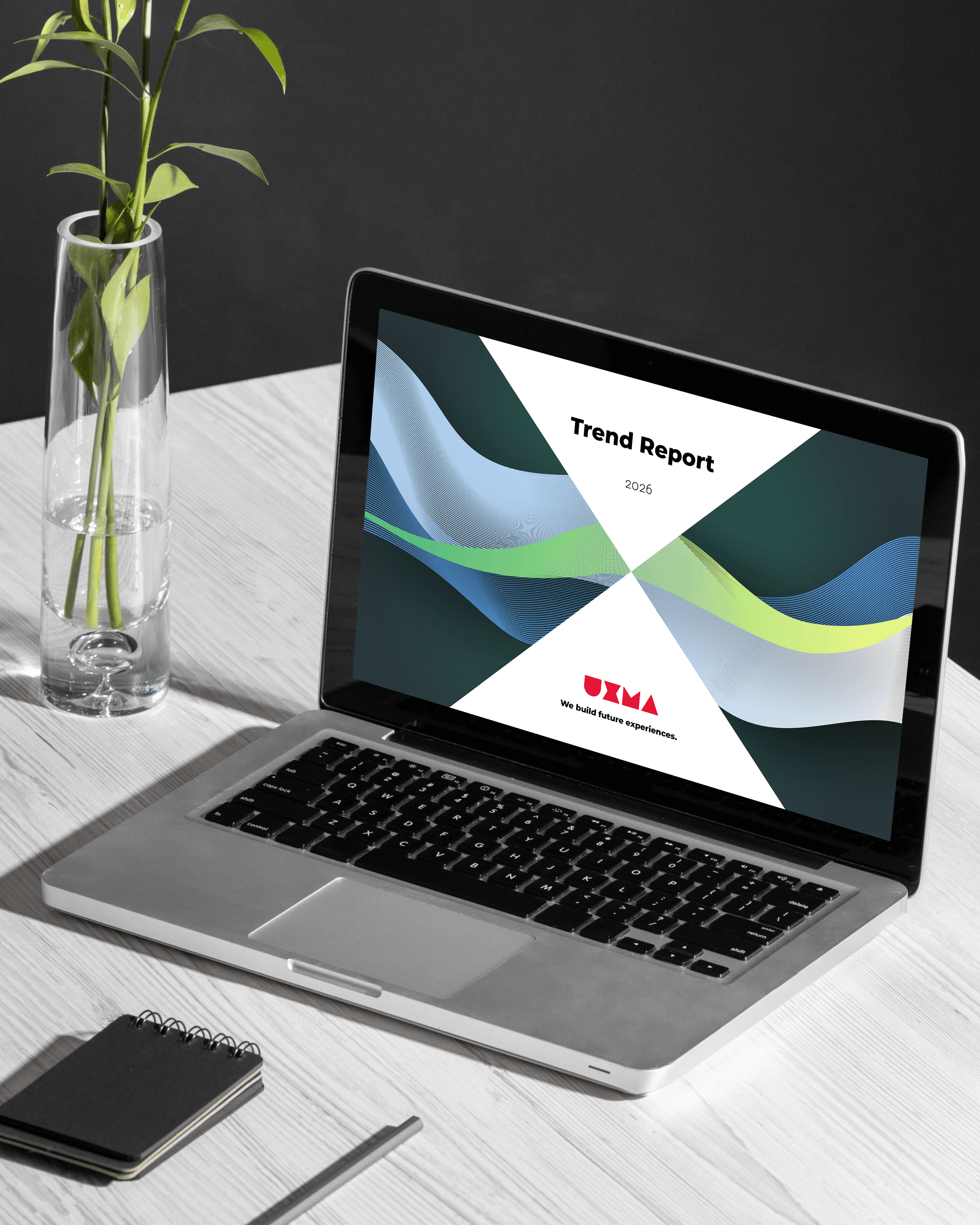
An open Apple laptop displaying the UXMA Trend Report 2026.

Life-Centered Design builds on Human-Centered Design and enables the creation of more responsible digital products.

This post is a summary. You can find the full article and additional trends on sustainability in our UXMA Trend Report 2026 (only in German available).


Insights

Let’s get started together!