
Industrial Design for Power­tools

Design Concepts of a hand-held circular saw

Power Tool Concept Illustration Using a Hand-Held Circular Saw as an Example

What does a technically feasible product concept look like that stands out in a competitive market through its iconographic design language, intuitive usability, and clear brand positioning?

The project focused on the conceptual design of a modern hand-held circular saw that combines brand values, performance-oriented design, and user experience within a holistic industrial design process. In the first roll-up, we showcase the process behind the design. This is not a market-ready product, but rather an internal pilot project that illustrates how our team develops a well-founded design concept.
  • 6

    Machine functions defined in the HMI

  • 2

    Design concepts: machine and interface design

  • 1

    design language combined in machine and interface
The project focused on the conceptual design of a modern hand-held circular saw that combines brand values, performance-oriented design, and user experience within a holistic industrial design process. In the first roll-up, we showcase the process behind the design. This is not a market-ready product, but rather an internal pilot project that illustrates how our team develops a well-founded design concept.
  • 6

    Machine functions defined in the HMI

  • 2

    Design concepts: machine and interface design

  • 1

    design language combined in machine and interface

From Design Question to Product Concept

In the professional power tools market segment, competition is increasingly decided by design and brand strength, rather than just technical specifications. We therefore had to address a variety of requirements when developing the design concept.

On the one hand, the concept was intended to convey specific brand values and integrate seamlessly into the brand’s existing product portfolio without appearing arbitrary. However, the design also had to evoke emotion, exude robustness, and immediately convey power through dynamic lines. Furthermore, iconographic recognizability was a central goal of our design concept. The circular saw we designed was intended to catch the eye immediately and stand out from the competition. At the same time, we could not neglect usability, the component design, physical controls, a digital HMI, and the integration of accessories and additional functions.

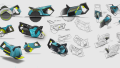
Various sketches of the design concepts at different stages of development
Sketches of the design concepts in different states of development

Develop, evaluate and refine ideas

The process began with a structured foundational phase: a project briefing, requirements gathering, and targeted competitive research laid the groundwork. At the same time, a mood board was created that visually distilled the brand values and positioned the new product within the context of the existing portfolio on the market. In a subsequent user journey phase, we sharpened our focus on innovation and market positioning. Our goal was not only to design a functional machine, but one that holds genuine emotional and design relevance for its target audience.

Two UXMA employees review the rough sketches and select the ones suitable for further development.
Joint discussion and selection of the preliminary sketches for further development

From Concept to a Consistent Design Language

The actual design development followed an iterative process: ideation and brainstorming led to rough sketches for the overall concept. Individual aspects were selected from a large pool of ideas and translated into four holistic conceptual approaches. The comparison of these approaches was a deliberate choice. It provided a solid basis for decision-making and made the different design intentions and their respective implications for the brand and the market tangible. Based on this, one of the four conceptual approaches was then developed into detailed sketches as the final preferred concept and consistently refined in terms of its design language, lines, and surface treatment.

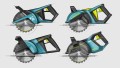
Overview of the four preferred concepts based on the Powertool Ideation framework
Overview of the four preferred concepts

Technical Design and HMI Integration

In parallel with the design refinement, we developed the HMI concept, which defines the saw’s digital interface in terms of both function and design—with a particular focus on the intuitive handling of physical controls and the seamless integration of digital display and control panels. This step is crucial because professional power tools are increasingly evaluated based on the quality of their human-machine interface interaction and no longer solely on performance data.

That’s why we focused intensively on developing an HMI that combines current design trends with intuitive user guidance. Among other things, the interface makes features such as blade speed, battery level, cutting depth and type, as well as error messages, visually easy to recognize through a bold presentation style, without losing any of its dynamism. For the aesthetics, we relied on a combination of Glass Morphism, striking gradients, and clear graphics that bring the spirit of the product to life through the HMI as well.

Hand-held circular saw interface with various functions
Interface with different functions

The Next-Level-Saw

The result of the initial rollout is a modern industrial design concept for a handheld circular saw featuring an iconic design language, high brand recognition, and outstanding usability. By combining performance-oriented design, clear brand integration, and intuitive user guidance, we created a product concept that stands out clearly in the competitive landscape while remaining technically feasible. The design language we developed creates an emotional connection with users.

A UXMA employee is sitting at a digital drawing board, working on the final design of the power tool.
Graphic development of the final concept

What’s next?

Great industrial design emerges when brand identity, the user’s perspective, and technical feasibility are considered together—from the first sketch to the CAD model. This in-house project demonstrates how an interdisciplinary design process creates a product that stands out on the shelf, feels great in the hand, and makes a clear statement in the market.

  • Illustration of the preferred design of the hand-held circular saw, viewed from the left side.
  • Power Tool Concept Illustration Using a Hand-Held Circular Saw as an Example
Preferred concept from both sides

Christian Jacobs Senior Industrial Design Engineer

  • 6

    Machine functions defined in the HMI

  • 2

    Design concepts: machine and interface design

  • 1

    design language combined in machine and interface
Cases

Project idea? Get in touch!