Synergy Effects for the Platform Family

UXMA has successfully completed a development project for the digital collaboration platform CO.RIO in partnership with Kiel University, and we are examining the synergies this project has generated for the design of future digital knowledge platforms. We explore whether these synergies can lead to cost savings and whether they might potentially limit design flexibility.

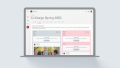
The picture shows the different platforms in an overview shot: DigitalHub.SH, CO.RIO and SMASH.
Design Elements of the CO.RIO platform were used for these projects

Design Foundation

With the CO.RIO platform for CAU, UXMA has created an educational platform that brings faculty, students, and industry partners closer together and makes it easier for them to connect. Through a co-creation process, we were able to incorporate user needs directly into the user interface. The result is a platform tailored to everyday university life, featuring intuitive atomic design elements, a clearly structured landing page with a navigation bar, and an easy-to-use login area.

As part of the user-centered process behind the CO.RIO platform, we created an extensive Atomic Design Library that serves as a central reference for similar knowledge and education platforms. Using this design foundation and our experience from the project, we leverage cost-saving opportunities when building new digital platforms for the educational sector. This gives us more space and time for creativity in the individual design and for addressing the platform-specific needs of users. The following two projects demonstrate specifically how we were able to successfully leverage these synergies and what challenges the design of individual platforms entails.
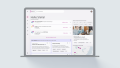
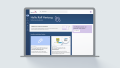
Overview of the screens of the platform CO.RIO, (SMA)SCH and DigitalHub.SH

Networked Digital School Development

As part of the international research project Smart Schools (SMASCH), a digital space is being created to facilitate exchange between schools from different national systems or cultural contexts. The project views school-based project work with partner schools in other languages as an opportunity and aims to promote school development in the digital world.

The existing CO.RIO design elements were utilized and further developed and serve as the building blocks of the new platform. However, there were different functional requirements than in the CO.RIO project, with a strong focus on multilingualism and data protection for minor students. Therefore, an independent system had to be developed during implementation to meet the requirements of a school platform. In the SMASCH project, we benefited from the Design Component Library and were able to incorporate the insights gained from the CO.RIO UX research.

The picture shows the interface of the platform SMASH on the screen of a tablet of a child, which works with the platform.
The platform of the SMASCH projects includes design elements of CO.RIO.

Open innovation in the DigitalHub.SH

Through a collaboration between the state, local governments, and the private sector, DigitalHub.SH forms a network that brings together the needs of the public sector and innovations from the digital economy. Our team is developing the digital platform, which features a complex matching algorithm to identify compatible project partners.

We were able to use the CO:RIO Design Library as a foundation during the wireframing phase. However, due to the increased complexity for users and the differing requirements imposed by a specific UX design system, there were no strong synergy effects in this project. We will soon showcase the development of the matching logic with a human-centered interface for open source in our case study.

A smartphone displaying the homepage of the matching portal. Ralf Hertzog is greeted, and below are listed the topics and projects that match his needs.

Experience and UX research instead of a fixed library

Our conclusion: Yes, the comprehensive CO.RIO project does generate synergies for other digital knowledge platforms, but when using the Design Library for other clients and in other contexts, one quickly reaches its limits.


Our project teams were able to draw on library elements and quickly produce initial drafts and prototypes, which play an important role as a basis for decision-making in stakeholder management. However, user needs and required functionalities usually differ so significantly that only limited synergy effects can be achieved with the help of a library in the subsequent process.


What does have a noticeably positive effect on the design in all the projects mentioned, however, is the experience and knowledge our team has gained in the subject area and in working methodically with user groups. Here, we benefit both in terms of the quality of the results and the development effort.

Insights

Project idea? Get in touch!